Whether you are just starting backpacking or have been camping for awhile one of the most important things to a good nights sleep outside is a Sleeping Pad. They come in many different forms and ways but the two most common ways you’ll find them labeled are Inflatable and Foam. Their names describe them perfectly, Inflatable pads have a valve of some sort that you either blow air into or use a bag type system to inflate. They provide more comfort, normally raising you at least two inches off the ground. These are great for comfort, keeping you from resting on the ground and providing a better nights sleep in my experience. On the other hand, Foam Sleeping Pads are pieces of Close Cell Foam that is extremely durable, requires no set up further than rolling it out, and won’t deflate on you in the middle of the night.
Why a Sleeping Pad?
So most people assume that a sleeping pad is for comfort to get a better’s night sleeps. This is very true and I have found the more comfortable you are, the better you will sleep. However, another key task of a Sleeping Pad is to insulate you from the ground. In the Summer when temps are high, a pad with a low value works just fine (R value or 2 or less) but when camping in the Spring, Fall, and Winter you really need a pad with an R value of 3 or higher to keep you warm. Otherwise, no matter how warm your sleeping bag is, you are going to be cold because the ground is constantly robbing you of warmth.
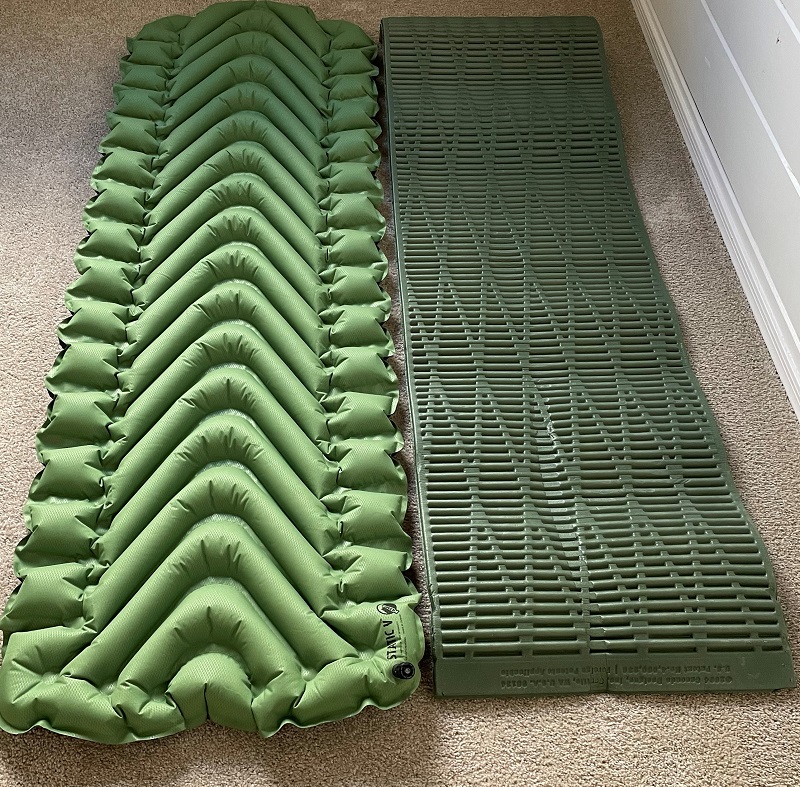
Inflatable Sleeping Pads
Inflatable Sleeping Pads are one of the most common and popular on the trail for good reason. They are more comfortable,, compact, and with the ability to get R values that will get you through all 4 seasons, extremely versatile. Most Inflatable sleeping pads are also extremely lightweight, my Klymit Static V pad weighs 1 pound 2 ounces and has an R value of 1.3. It packs up to the size of a Nalgene Bottle and fits inside my pack.
From a durability stand point, Inflatable pads are less durable than a Closed Cell Foam Pad but in my experience, if you are careful and remove rocks and sharp objects before laying out your pad, these will be durable enough for most users. They are quick to blow up, my Klymit taking between 10-20 breaths to blow up and most higher end pads now come with a bag system, that allows you to blow up your pad without needing to manually blow it up (This is super important when you just hiked up a mountain and are feeling lightheaded). These are help keep moisture out of your pad.
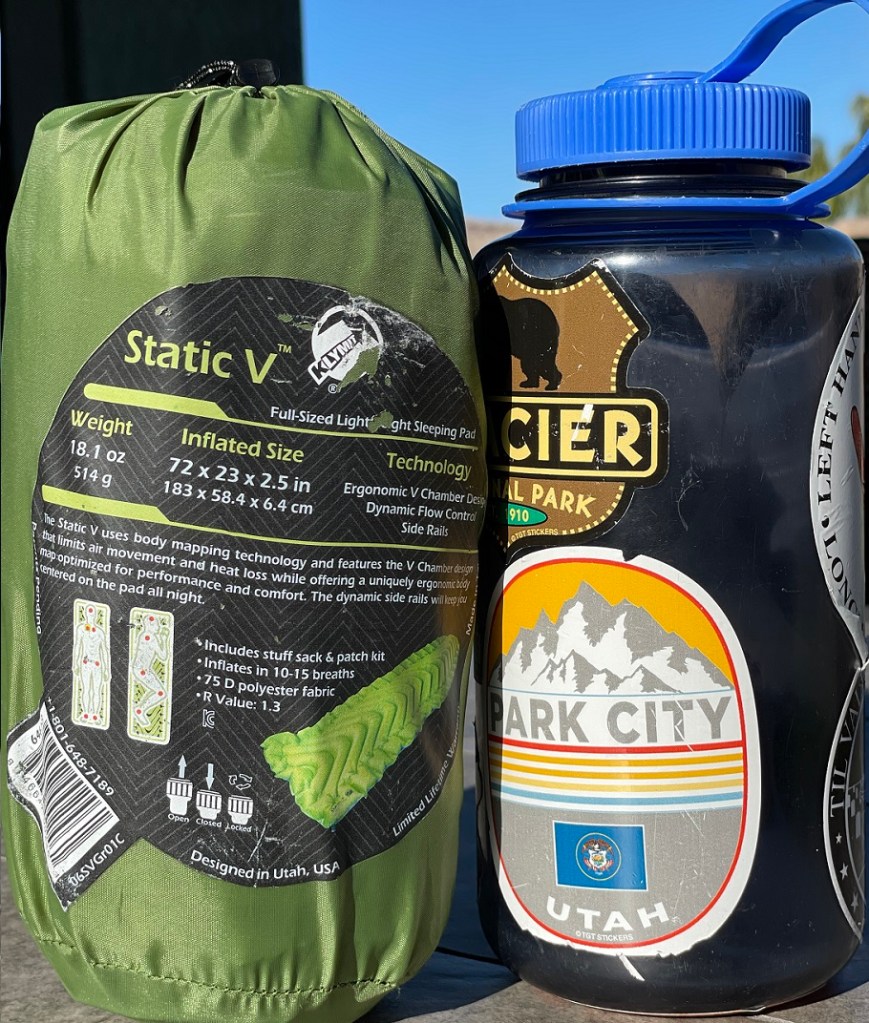
Closed Cell Foam Sleeping Pads
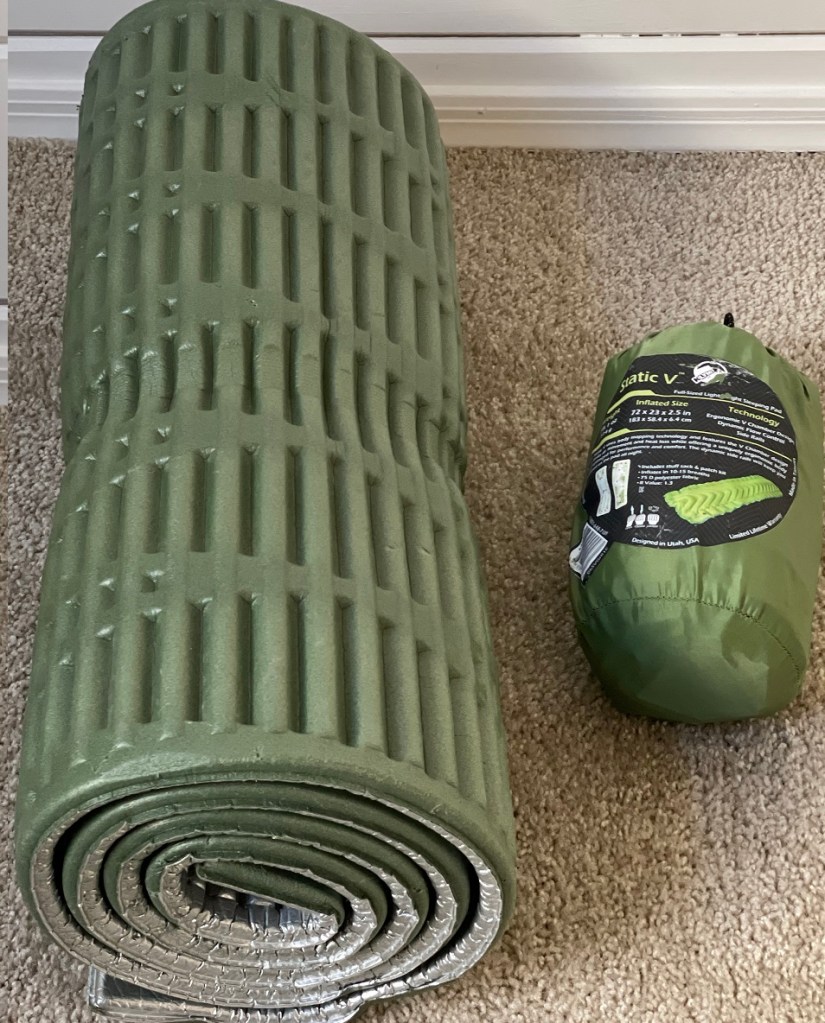
Closed Cell Foam Pads are the original sleeping pad. No air is needed to blow them up and their set up is as simple as rolling them out. They are bulkier than Inflatable Sleeping Pads, normally needing to be strapped to the outside of the back due to their size. This has two downfalls, they get caught on the branches and brush as you walk along the trail and they get dirty, which brings dirt and grime into your tent and onto your sleeping bag. This is especially true in the Southwest where a lot of the hiking trails can be dusty after there has been no significant rain for awhile. The first pad I bought was a Therm-a-rest Ridgerest closed cell foam pad and it is still going strong 6 years later and will likely last my lifetime.
Durability wise nothing beats Foam Sleeping Pads. They can have chunks ripped out and be missing pieces and they work just as good as the day you got them. Additionally, they set up quick and unless you lose it, won’t fail you in the backcountry.
Summary
While both options will work, unless you are planning on cowboy camping in a cholla field I think an inflatable air pad will serve most people well and provide you comfort and rest in the backcountry. However, for a budget winter and cold weather set up, one of the best options is to combine the two. In cold weather or where weight isn’t such a concern, I will take bother the inflatable and foam sleeping pad, giving me an R value of over 3 and providing me more options and comfort in the backcountry, which can be priceless.
You can find some of our recommended packs and gear here! What is your favorite Pad and Why?
As an Amazon Associate I earn from qualifying purchases.
 Expedition Southwest
The Savotta Finnish military sleeping pad is great , a bit bulky but it will survive anything and is very good quality and insulating enough to be a 4 season pad.
LikeLiked by 1 person
Thanks for the add Mick, I will have to check it out since I am going to be looking for a 4 season pad here soon!
LikeLike
I have both of these options as well. I really like my “regular” green Klymit pad, having had it on many camping and backpacking trips, and to boy scout camp for a week at a time. Once on a backpacking trip I was tarp camping, and a sharp stick poked right up through the strip of Reflectix insulation I had underneath my pad – the Klymit wasn’t even scratched. I don’t use my RidgeRest as much anymore because it’s so bulky and we do a lot more backpacking these days, but it’s great for an extra layer at winter camp as you say. I did just get the insulated version of the Static V (the orange pad) and am looking forward to trying it out. I believe Klymit also makes “lite” versions of these pads but I have stuck with the regular ones just because I like the durability of the materials.
LikeLiked by 1 person
Love hearing you are having success with the Klymit pad as well. The Klymit is one tough pad for the price. I have been surprised by not only its durability but its flexibility. For a summer pad I expected it to be colder but down to 50 I can be pretty comfortable with it. Then the Ridgerrest is normally added for some extra warmth.
LikeLiked by 1 person
I have had the same experience. I even had mine down to the low 30s with a strip of Reflectix underneath (granted I was also on top of a nice bed of pine needles!). It’s definitely not a perfect pad, but it’s hard to complain when it was so inexpensive and seems nearly indestructible so far.
LikeLike